
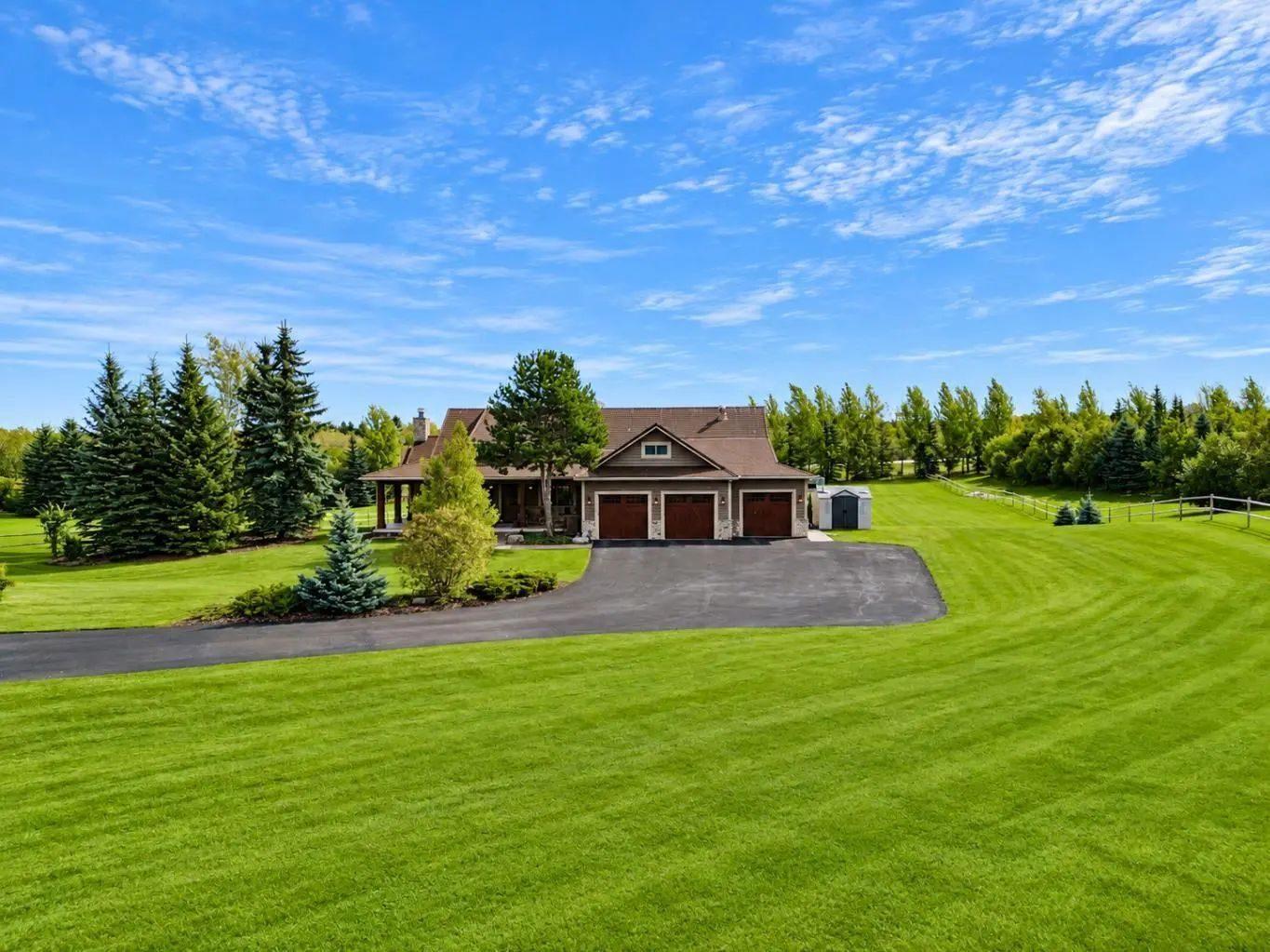
You're probably here because…
- You want space — for horses, a shop, a garden or just quiet — whether that’s close to the city or well out in the country.
- You’ve found an acreage and aren’t sure what to check beyond the house.
- You’re selling an acreage, and the comparable sales are few and far apart.
- Someone has raised a question about the well, the septic or an outbuilding.
- You’re moving out of the city and want to know what country living really costs.
The house is only part of it
In the city, a home inspection covers most of what can go wrong. On an acreage, the buyer is also taking on a water supply, a sewage system and land governed by a county land use bylaw instead of the city’s. Each needs its own checks, and most of them belong in the offer as conditions, with enough time to complete them.
That’s also why acreages take longer to price and to sell. No two are alike — acres, water, outbuildings, topography, road access and distance to the city all move the value — so the comparable sales need careful adjusting rather than averaging.
Water comes first
Most acreages in Alberta get their water from a private well, a cistern filled by truck, or a piped rural water co-op or utility. Each comes with different costs and different questions.
A well for household use doesn’t need a licence in Alberta — a household can use up to 1,250 cubic metres a year — but the owner is responsible for the water’s quality. The province recommends testing a private supply at least once a year, for bacteria and for basic chemistry. Many wells also have a drilling report in Alberta’s free public water well database, showing the depth, the yield when it was drilled and sometimes the water chemistry.
- Look the well up in the Alberta Water Wells database before you offer.
- Make the purchase conditional on a flow (quantity) test and a water quality test — bacteria plus chemistry.
- Ask the age of the pump and pressure tank, and which treatment equipment stays.
- Hauled water: cistern size and delivery cost. Co-op: membership transfer, rates and any capital levies.
Septic: what’s in the ground matters
Private sewage systems in Alberta are built to the provincial Private Sewage Systems Standard of Practice and need a permit to install or replace. Most acreages have a septic tank with a treatment field or mound. Some older ones have an open discharge — treated effluent piped onto the surface — which needs at least 90 metres to a property line, 45 metres to a building and 50 metres to a water well, so it simply doesn’t fit on many parcels.
Ask the seller for the permit records and the pumping history, and make an inspection by a qualified septic professional a condition. A failing field is one of the more expensive surprises an acreage can produce, and any replacement has to meet today’s standard.
Land use, outbuildings and animals
The land use bylaw of the county or municipal district the acreage is in — Foothills County, Rocky View County or any other in Alberta — decides what the parcel can be used for: the number and size of outbuildings (often scaled to parcel size), home businesses, secondary suites and animals. Before you buy, check that the shop, barn, suite or business you’re paying for has the permits it needs. An unpermitted building becomes the new owner’s problem the day the sale closes.
A Real Property Report shows where every structure sits in relation to the property lines. And if someone tells you the acreage “can be subdivided,” treat it as a question for the county, not a feature: subdivision depends on the land use district, the county’s plans and approval, and it is never guaranteed.
Title, access and what’s underneath
Rural titles often carry more than city ones: utility rights-of-way, easements, caveats, and oil and gas interests. A surface lease for a well site pays annual rent until the site is reclaimed; a pipeline right-of-way is usually paid for once, and you generally can’t build on it. Abandoned wells are mapped by the Alberta Energy Regulator, and any building near one needs a five-metre setback around it. The buyer’s lawyer should walk you through everything registered on title before conditions come off.
Then the practical questions. Who maintains and plows the road in? Is the property near a river or creek on the provincial flood maps? Is it within 300 metres of a provincial highway, or 800 metres of a highway intersection, where new buildings need a roadside development permit from the province? And weeds: under Alberta’s Weed Control Act, owners must control noxious weeds and destroy prohibited noxious ones, and the county can bill you if it has to do it.
What country living really costs
Budget beyond the mortgage: power and natural gas (or propane), water testing and treatment, septic pumping, snow removal on a long driveway, garbage runs, rural internet, and insurance — ask the insurer how the distance to the nearest fire hall affects the premium. Get a year of the seller’s actual bills if you can.
Financing can differ too. Some lenders limit how much land they’ll lend against, or don’t count outbuildings toward the value. Talk to a lender who does rural properties regularly before you start viewing, so the pre-approval matches the properties you’re looking at.
Selling an acreage
The acreages that sell well are the ones whose answers are ready. Before listing, put together the file a careful buyer will ask for — and consider doing the water test and septic inspection yourself first, so nothing surprises you in the middle of a deal.
Then market the land as well as the house: aerial photos, a boundary map, the outbuildings and what each is used for, and the view from where the buyer will actually stand. Pricing needs the same care — fewer comparables, more adjustments — and the timeline is usually longer than in the city, with late spring through fall showing land at its best.
- Well drilling report and a recent water test.
- Septic permit records and pumping history.
- Real Property Report, and permits for the house, outbuildings and any suite.
- A year of utility, propane, internet and property tax costs.
- Any surface lease, right-of-way or co-op agreements.
How the process runs
- Decide what the land is forAcres, animals, a shop, distance to work and school, and how much upkeep you want — before you look at listings.
- Get a rural-ready pre-approvalA lender who knows how acreages, land value and outbuildings are financed.
- Check the parcel before you offerLand use district, well records, abandoned well and flood maps, road access and title.
- Write conditions that cover the propertyWater flow and quality tests, septic inspection, home and outbuilding inspection, and a title and permit review.
- Complete the checks in timeRural tests take longer to book than a city home inspection; build enough days into the conditions.
- Close and settle inTransfer co-op memberships and service accounts, and keep the well and septic records for when you sell.
New every weekI'm answering the questions people ask me most in short videos, with new uploads each week. Follow along on YouTube.
Common questions
Do I need a licence for a water well on an acreage in Alberta?
Not for household use. Alberta’s Water Act lets a household divert up to 1,250 cubic metres of water a year without a licence, and household users have the highest priority. Larger agricultural or commercial use can need a licence. Either way, the owner is responsible for water quality — the province recommends testing a private supply at least once a year.
What should I test before buying an acreage?
At a minimum: the well’s flow (how much water it produces) and water quality — bacteria and basic chemistry — plus an inspection of the septic system and its permit records, and a home inspection that covers the outbuildings. Also check the land use district, the Real Property Report, the title, and the Alberta Energy Regulator’s map for abandoned wells.
What is an open discharge septic system, and is it allowed in Alberta?
It’s a system that pipes treated effluent onto the ground surface instead of into a buried field. It’s still allowed where it fits, but Alberta’s standard requires the discharge point to be at least 90 metres from a property line, 45 metres from a building and 50 metres from a water well — so it isn’t possible on many smaller acreages, and a replacement has to meet the current standard.
Can I subdivide my acreage?
Possibly, but it is never automatic. Subdivision needs approval from the county and has to fit the land use district and the county’s plans. The county can take up to 10% of the land as municipal reserve — or cash in its place — and any abandoned wells must be located and tested first. Talk to the county’s planning department before you count on it, whether you’re buying or selling.
Is it harder to sell an acreage than a house in the city?
It usually takes longer, because there are fewer buyers and fewer true comparables. What shortens it is preparation: a recent water test, septic records, permits for every building, a Real Property Report and a year of running costs ready before the first showing, plus marketing that shows the land, not just the house.
Buying or selling an acreage? Start with the land.
Tell me what you’re looking for, or about the acreage you’re selling. I’ll come back with what to check, what it’s realistically worth, and where the surprises usually hide — before you’re committed to anything.
- No obligation, no pressure
- Straight answers
- Personal reply within one business day
Rather talk? Call or text 403-993-8393.
Sources & further reading
- Environmental Law Centre — Water rights and property rights (household use)
- Government of Alberta — Alberta Water Wells web application
- Government of Alberta — Testing farm drinking water
- Safety Codes Council — Private sewage separation distances
- Rocky View County — Land Use Bylaw
- Foothills County — Weed control
- Alberta Energy Regulator — Directive 079 FAQ (abandoned wells)
- Government of Alberta — Roadside development permits
- Government of Alberta — Flood Awareness Map
- Government of Alberta — Land and Property Rights Tribunal (surface rights)
- Real Estate Council of Alberta — consumer information
This guide is general real estate information for Alberta. It is not legal, tax, mortgage or accounting advice, and it does not create an agency relationship. Rules, programs and timelines change — confirm anything that affects your situation with your own lawyer, accountant or lender. Kylian Pomares is a real estate associate licensed in Alberta with Standard Realty Co., and a REALTOR®.